M-SCOPES – MEDIATED SIGNIFICATIONS IN FINANCE
May 17, 2012 § 1 Comment
While presenting recently at the conference, Photomedia 2012-Images in Circulation, organised by the Aalto University of Arts, Design and Architecture in Helsinki, I managed to hear the research presentation by Yrjö Tuunanen, titled, Visualising the Economy – Visual Representations of Financial News. Yrjö is a doctoral student in the Department of Media at the university where his research interests include visual communication, multimodal discourse analysis, social semiotics with a special interest in financial news discourses mediated in the news media. His presentation was further informed as a result of his role, along with Dr. Heidi Hirsto in the transnational research project, M-Scopes – Mediated Significations of Finance, a collaborative undertaking including the Parsons The New School for Design, New York and the National University of Singapore:
M-Scopes is a collaborative research initiative focusing on the ways in which economic phenomena and mechanisms are visually reproduced in multimodal electronic news media.
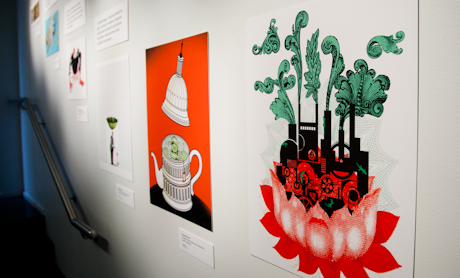
‘Visualising Finance Lab’, Aalto University, Helsinki, May 2012 (Installation image)
A core component of the project took the form of a two-day seminar recently held in Helsinki which included an accompanying installation. Described as addressing the ‘confusion and loss, emotion, metaphor, and design process in the communication of financial concepts’, the exhibition had particular interest ‘in the power of metaphor to access the emotions that inform financial behaviors’.
The research project continues and an accompanying blog has been established providing updates and engagements with the discourse of media representation of finance, exemplified in this entry, Encounters in Multisemiotic Economy. At this critical global moment, M-Scopes forms a significant entry point to a number of international projects critically addressing the media representation of finance, also a key framing concern for Land of the Blind
Lockout, Dublin 1913: Interview with Padraig Yeates
May 11, 2012 § 8 Comments
Author of the authoritative and substantial account, Lockout: Dublin 1913, the journalist, Padraig Yeates has been interviewed over six chapters, outlining the build up, resulting events and the subsequent impact of the Lockout. Linked below in the final chapter, Yeates argues how with the actions of 1913 were deemed an ‘heroic failure within the nationalist pantheon’ and as a result, the socialist ideals of the movement were subsequently ‘hijacked’ in favour of the same nationalist agenda in the overthrow of colonial dominance. However, with the forthcoming centenary, Yeates advocates a need to ‘reclaim’, in their fullness, the pivotal events of 1913.
‘Visuality is Slavery’
April 4, 2012 § 2 Comments
Writer, critic and Professor of Media, Culture and Communication at New York University, Nicholas Mirzoeff has been posting daily discursive observations and reflections on his blog, Occupy 2012: A Daily Observation On Occupy, inspired by, and as a response to, his involvement with the New York Occupy movement.
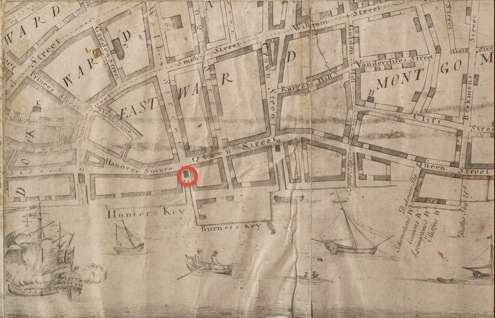
The slave market on Wall Street circled in red
This particular entry, Visuality is Slavery, was posted on Martin Luther King Day, when people had gathered at the African Burial Ground in Manhattan and then marched to Wall Street, former site of a slave market. Mirzoeff notes how this ‘was not simply a historical recovery but a reminder that the authority claimed by present day claims to visualize the social derives from the power of the slave-holder’:
http://www.nicholasmirzoeff.com/O2012/2012/01/16/j16-visuality-is-slavery/
‘More Lockouts as Companies Battle Unions’
January 31, 2012 § 1 Comment
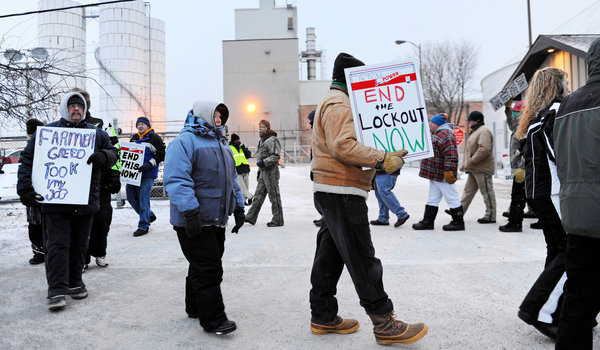
(photograph by Dan Koeck, New York Times)
Framed by the continuing global economic collapse, a recent edition of the New York Times reported how the Lockout, ‘once rare’, has become increasingly the means of redress in the United States, evidencing ‘increased employer militancy’.
Government Inquiry: Derelict Dublin, Images of the City from 1913
January 22, 2012 § Leave a comment
‘I condemn the whole of the tenement system now existing. It breeds misery; and worse. It causes a great waste of human life and human force; men, women and children can never rise to the best that is in them under such conditions.’ (John Cooke, Report into Housing Conditions (1914))
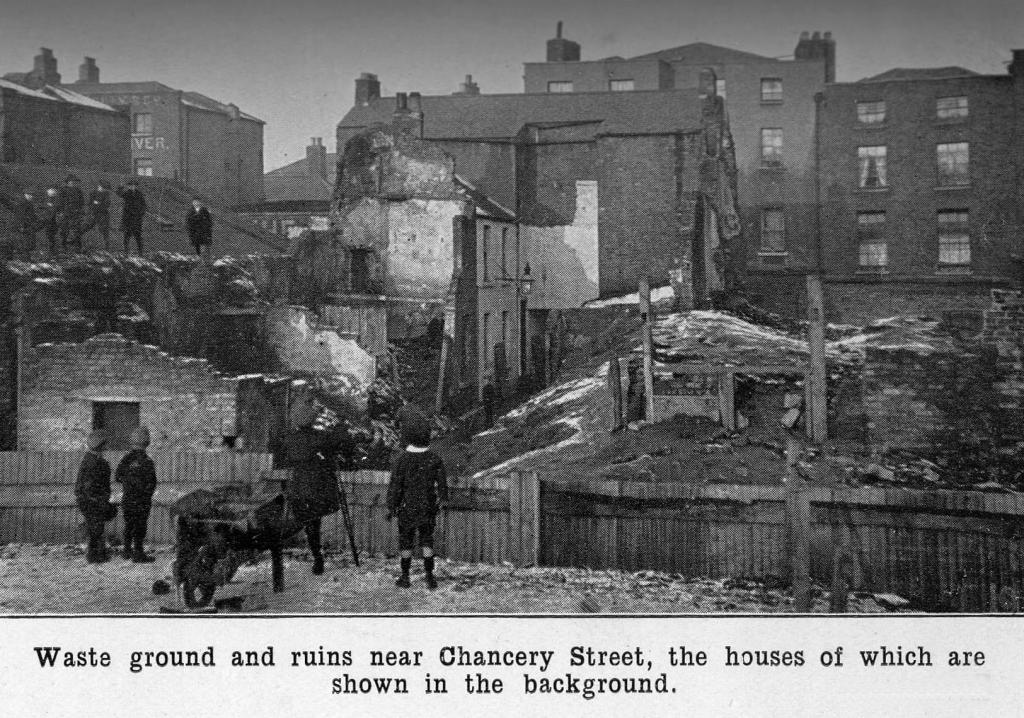
As part of the backdrop to the pivotal events of the 1913 Lockout. Linked is an essay and image gallery from Dublin City Public Libraries, taken from the inquiry and report of the Departmental Committee appointed to inquire into the housing conditions of the working class of Dublin which ‘ followed the collapse of tenement buildings in the city in the same year resulting in the deaths of seven people, including three children’ and many more badly injured. The dreadful living conditions of the working poor were to be addressed in this inquiry published by the Local Government Board For Ireland.
Dublin, 1913—Strike and Lockout
January 9, 2012 § Leave a comment
The 1913 Dublin Lockout was a defining and pivotal industrial dispute between workers and employers in the Irish capital, which began on the 26th of August, 1913 and lasted until January 18th, 1914. Central events took place in Dublin, the Irish capital, and is viewed now as one of the most significant moments in Irish labour history as workers fought for their right to organise and unionise.
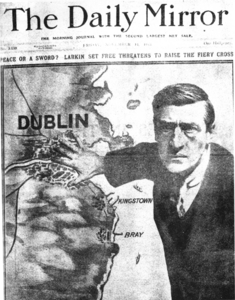
(image source: MultiText Project, UCC)
A series of images regarding the visual representation of these pivotal events can be viewed here. This series is part of a wider research project undertaken by the University College Cork titled the MultiText Project:
It is the largest and most ambitious project undertaken by any university to provide resources for students of Modern Irish History at all levels: University students, the general reader, and second-level students. The project aims to publish a minimum of 12 books, each dealing with a separate period of Irish history. Each book contains accounts of key personalities, concepts, and detailed elucidations of some case studies in the period. (source: University College Cork)
Publicart.ie Interview with project curator, Helen Carey
January 9, 2012 § Leave a comment
Publicart.ie interviewed Helen Carey, curator and Director of the Limerick City Gallery of Art, about her project developing the centenary exhibition to commemorate the 1913/ 2013 Lockout.
THE MARKET a project by Mark Curran
January 9, 2012 § 10 Comments
In the continuing evolutionary aftermath of the global economic collapse of 2008/2009 and absence of sustained practice-led research engagement with the central locus of this catastrophic event, the ethnographically informed, multi-sited, transnational project, THE MARKET (2010-), builds upon the cycle of long-term research projects, beginning in the late 1990s, by practice-led researcher and educator, Mark Curran, and focuses on the functioning and condition of the global markets and the central role of financial capital.
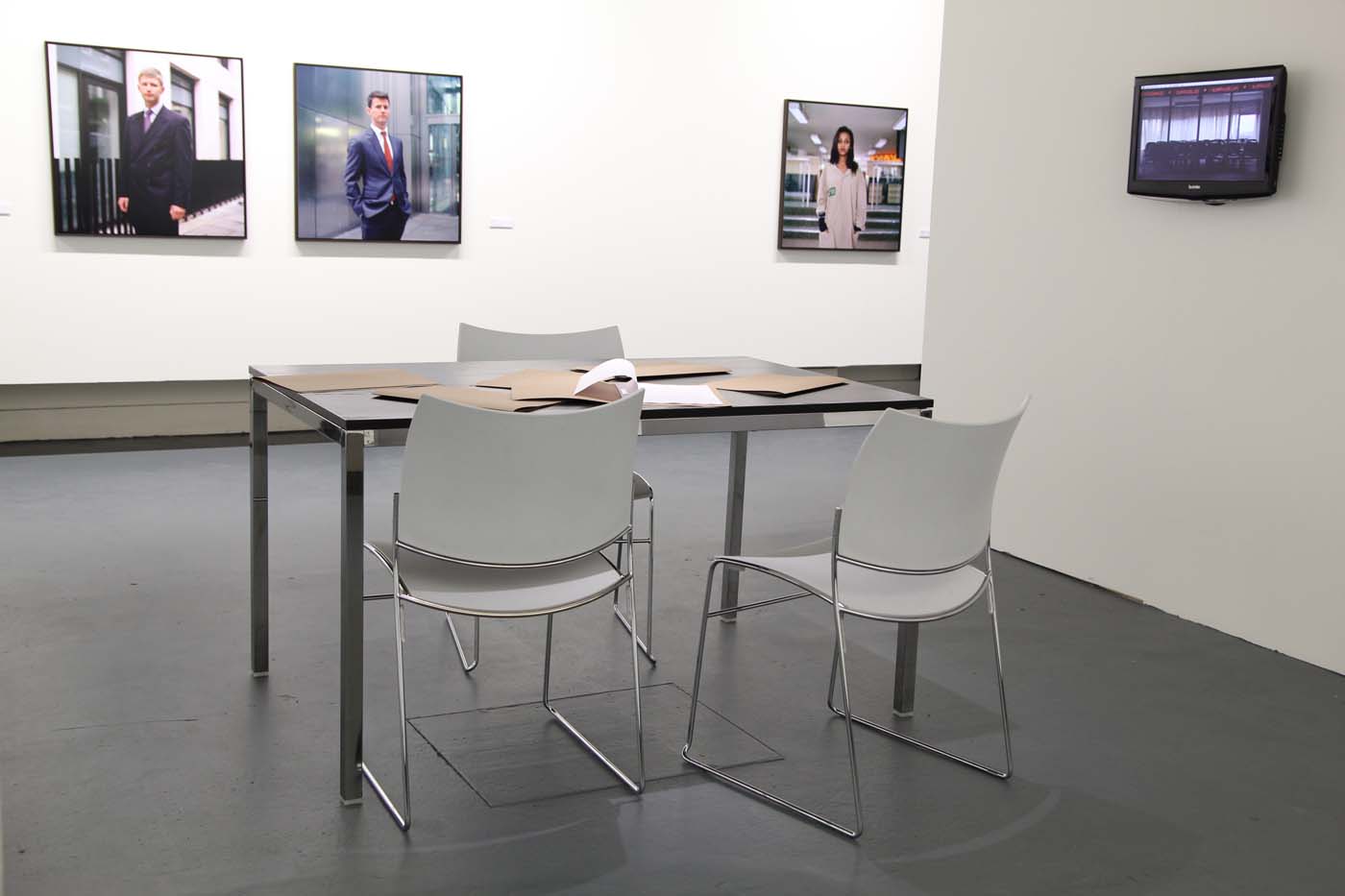
THE MARKET (installation image) Belfast Exposed 2013
The cycle of multi-media research projects, addressing the predatory context resulting from migrations and flows of global capital began with SOUTHERN CROSS (1999-2001)(Gallery of Photography/Cornerhouse 2002) which surveyed the spaces of development and finance of the so-called ‘Celtic Tiger’ Irish Republic. This was followed by The Breathing Factory (2003-2006)(Edition Braus/Belfast Exposed/Gallery of Photography 2006) and subject of his practice-led PhD, sited in a multinational complex in Leixlip in the East of Ireland, the project addressed the role and representation of labour, global labour practices and fragile nature of globalised industrial space. Ausschnitte aus EDEN/Extracts from EDEN (2003-2009)(Arts Council of Ireland, 2011) focused upon a declining industrial and coalmining region in the former East Germany, an area which prophetically evidenced the massive impact regarding the unevenness of development inherent through the functioning of neoliberal globalisation. All projects are intended to demonstrate a continuing and sustained engagement addressing the predatory impact of global capital.
Critically, the ongoing project, THE MARKET, which began in 2010, seeks to access those sites, which all of the other project work to date has also been decisively defined, spaces where literally and metaphorically, futures are speculated upon – the global markets – and to explore, survey and excavate focusing upon their operating functioning and how this is reflected in for example, language, architectural understandings and centrally, the individuals who inhabit, dwell and labour within these global financial spheres. Conceptually pivotal and mindful of technological evolution with specific reference to the role and functioning of algorithms, has been a desire to both make visible an understanding of such sites and to explore the interconnectedness of such markets. Therefore, multi-sited access has been sought to survey various global locations, including sites in Dublin, London, Frankfurt, Addis Ababa and Mumbai. Extended stays and re-visits have been undertaken in each location to facilitate further research regarding the site, address access, establish contacts and develop relationships with individuals as key collaborators and informants of the project.
As demonstrated in Curran’s previous projects, the cross-disciplinary interventions have included an ethnographic understanding in the collaborative and multi-vocal application of media in the form of photography, audio-digital video, soundscape and the collation of verbal testimony. The intention for THE MARKET has been to afford process-led undertakings over the course of its construction, extending to site-specific interventions, web presence and forums around the project installations incorporating interested parties thereby facilitating the opening up of discursive spaces around the central thematic.
In the financial markets, there is a natural predatory instinct that is hard to control (former trader and author, Micheal Lewis, BBC World Service, 9 May 2010)
The video shows a taped up plastic curtain inside the factory, one that seems to be installed for blocking the artist from viewing production equipment and process. Although we cannot see, there seems to be a working (breathing) machine inside the curtain as it, almost unnoticeably, inflates and deflates repetitiously. In fact, the video seems to summate what the audience experiences in the exhibition. The camera made its way inside the factory, but it cannot tell us what the employees actually do or what they produce. We are only allowed to hear the breathe of the factory. This is analogous to today’s globalised economy and financial markets. For many of us, it is almost unfathomable to understand how they operate. We are left outside of a curtain, inside of which a giant machine breathes intermittently. (from Spectators of the Same Story: Economy, Technology, Photography, Jung Joon Lee, Review of The Breathing Factory: A Project by Mark Curran, DePaul Art Museum (DPAM), Chicago January-March 2010, CAMERAta, Seoul, Korea, May 2010)
Keywords Global Capital, Ethnography, Photography, Speculation, Transnational, Vulnerable, Fieldwork, Precarity, Testimony, Cross-disciplinary, Labour, Witness, Reflexive, Installation, Montage, Multivocality, Access, Technology, Algorithms, Visual Art, Futures
 THE MARKET