Installation: THE MARKET
September 8, 2013 § Leave a comment
Gallery of Photography, Dublin 24 August – 1 october 2013
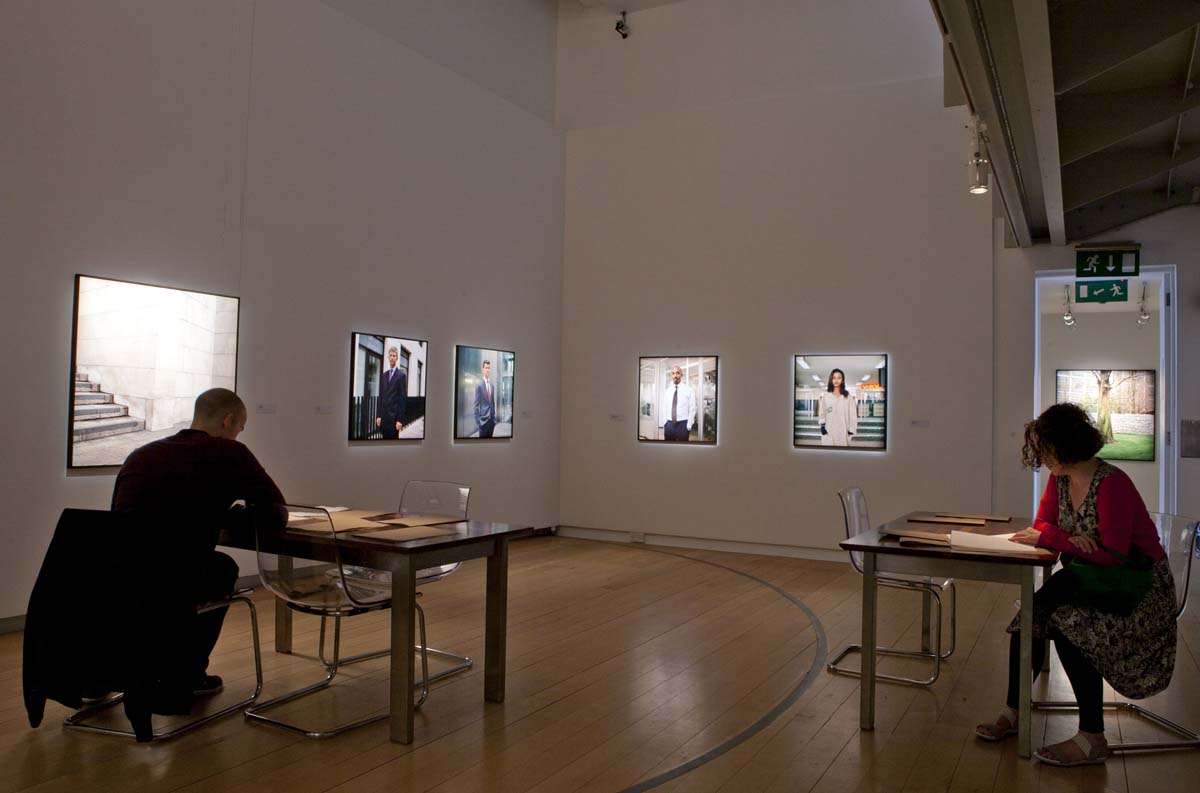
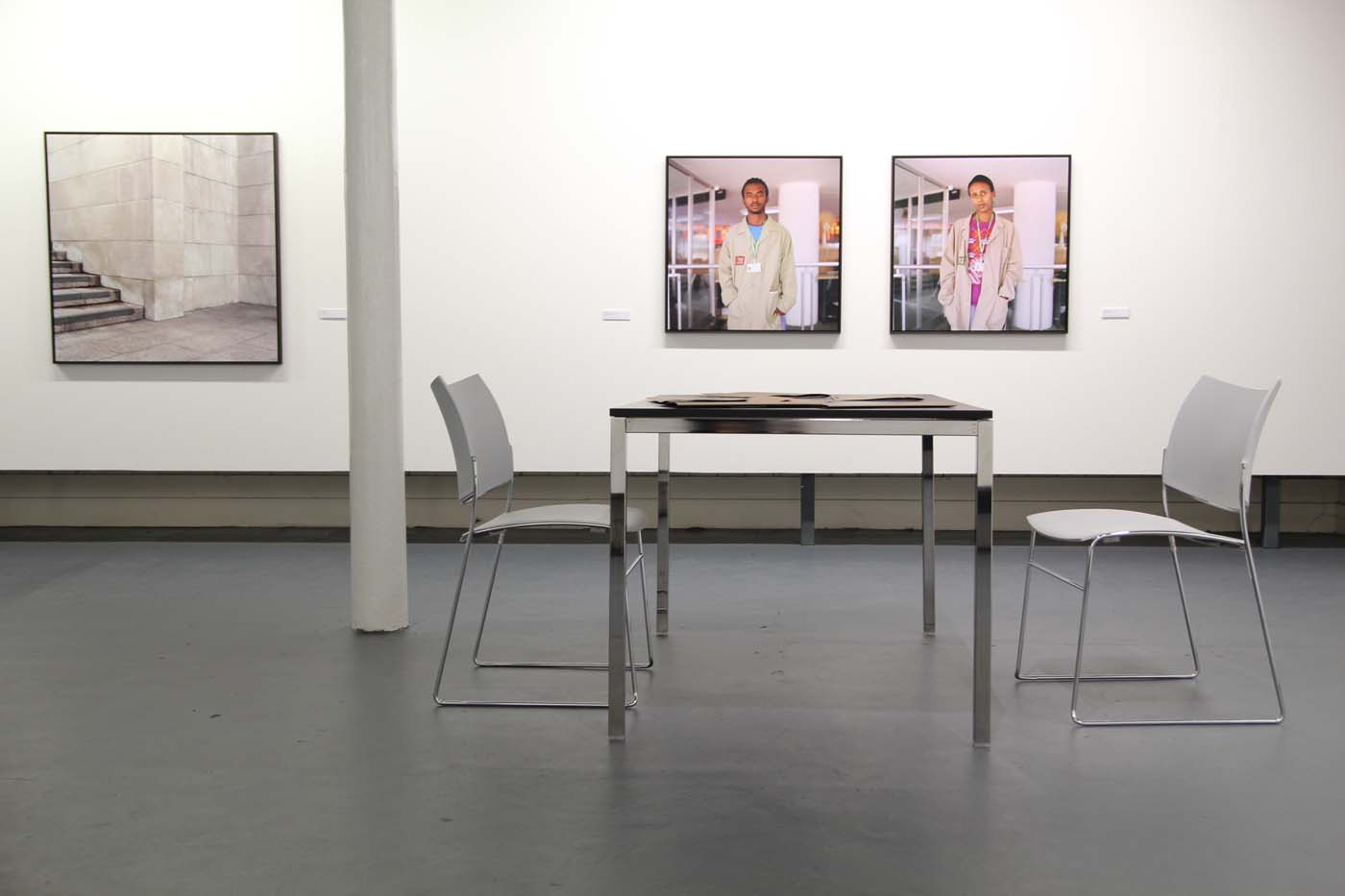
(installation photograph by Jamin Keogh)
(installation photograph by Jamin Keogh)

(installation photograph by Jamin Keogh)
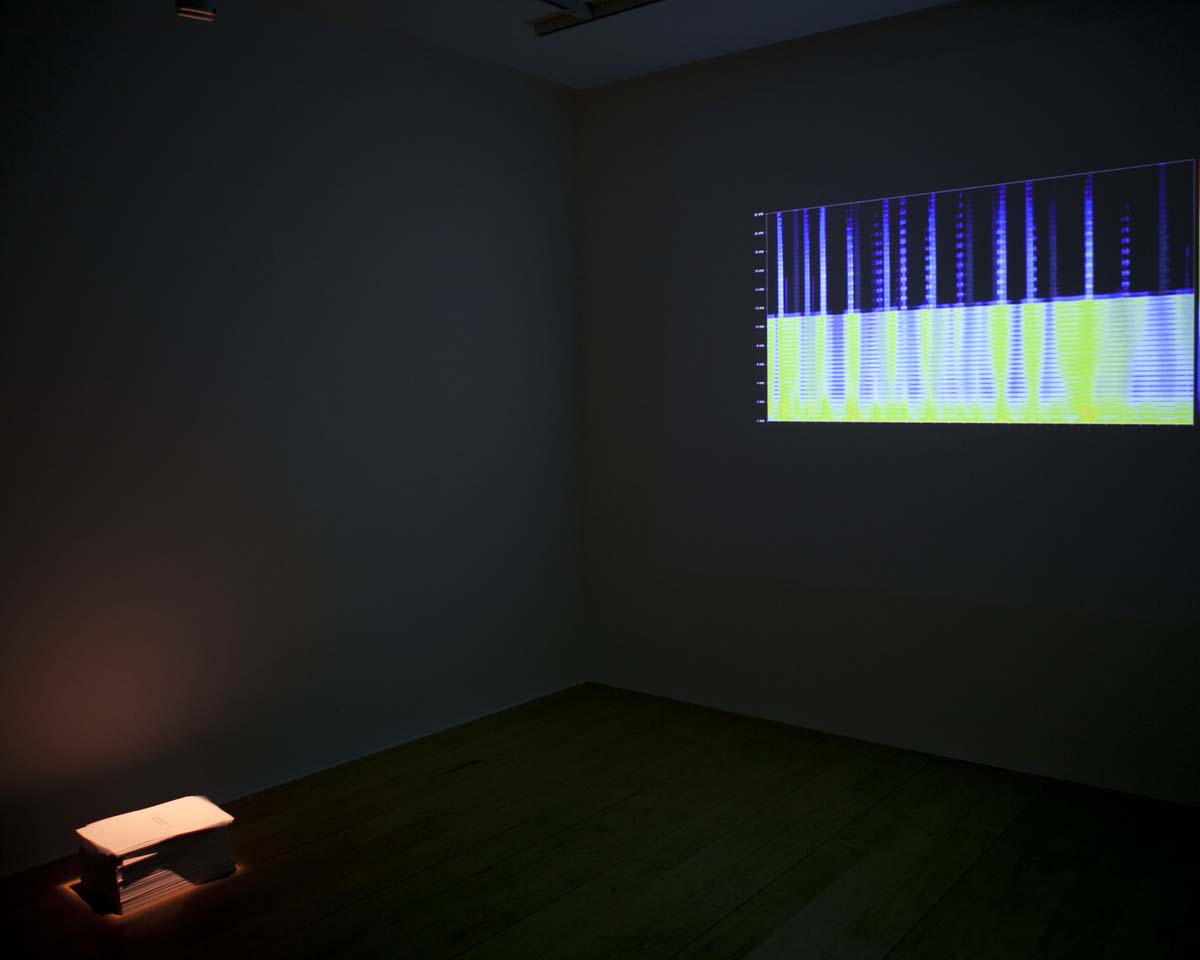
The image above of part of the installation titled The Normalisation of Deviance shows Spectrograms, a moving visual representation of the soundscape of the installation. The soundscape has been generated through the data generated through the use of an algorithm to identify how often the Irish Minister for Finance has used the word Market or Markets in his public speeches since taking office.
(installation photograph by Jamin Keogh)
(installation photograph by Jamin Keogh)
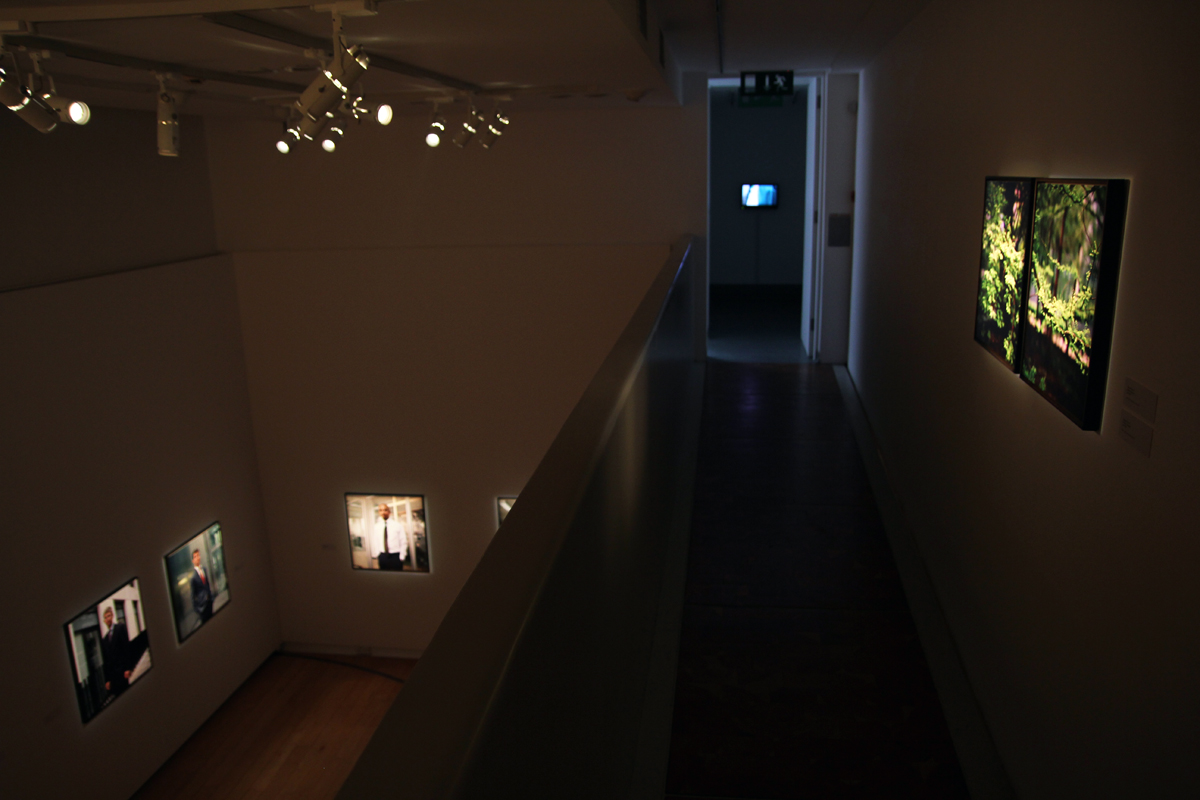
(installation photograph by Jamin Keogh)
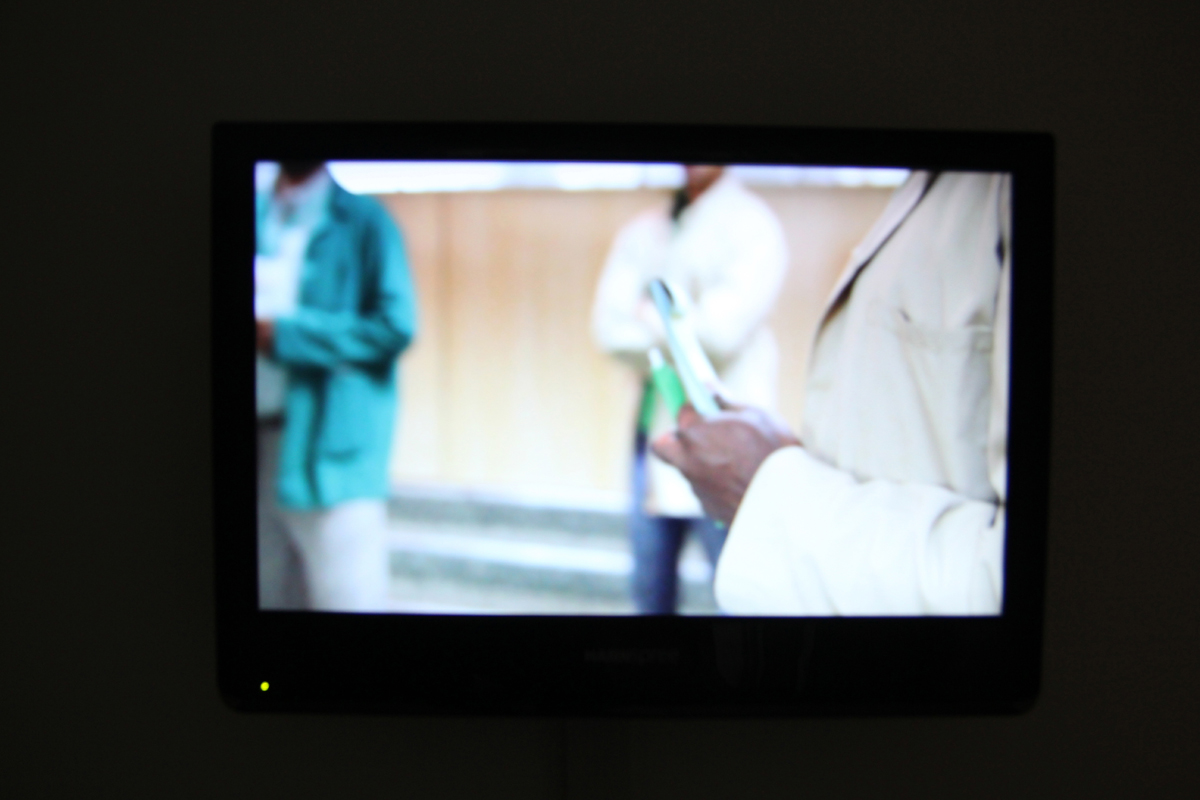
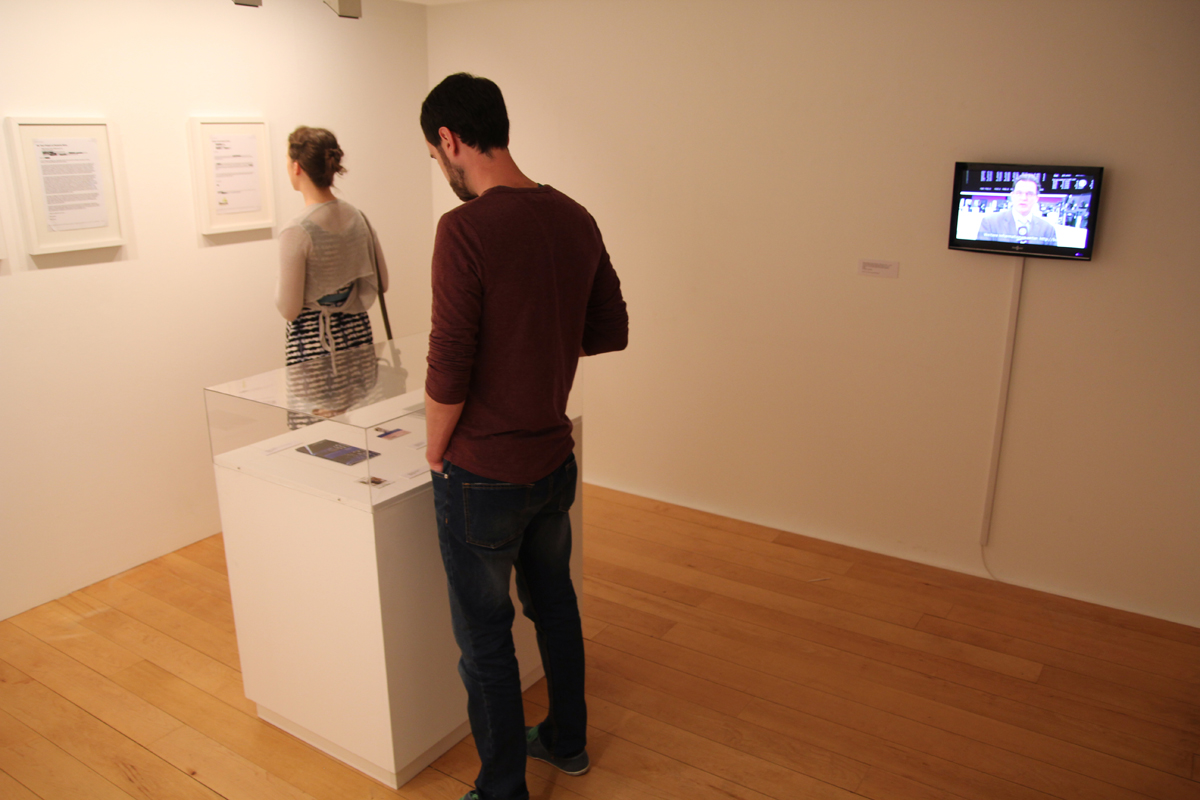
Belfast Exposed 29 August – 11 October
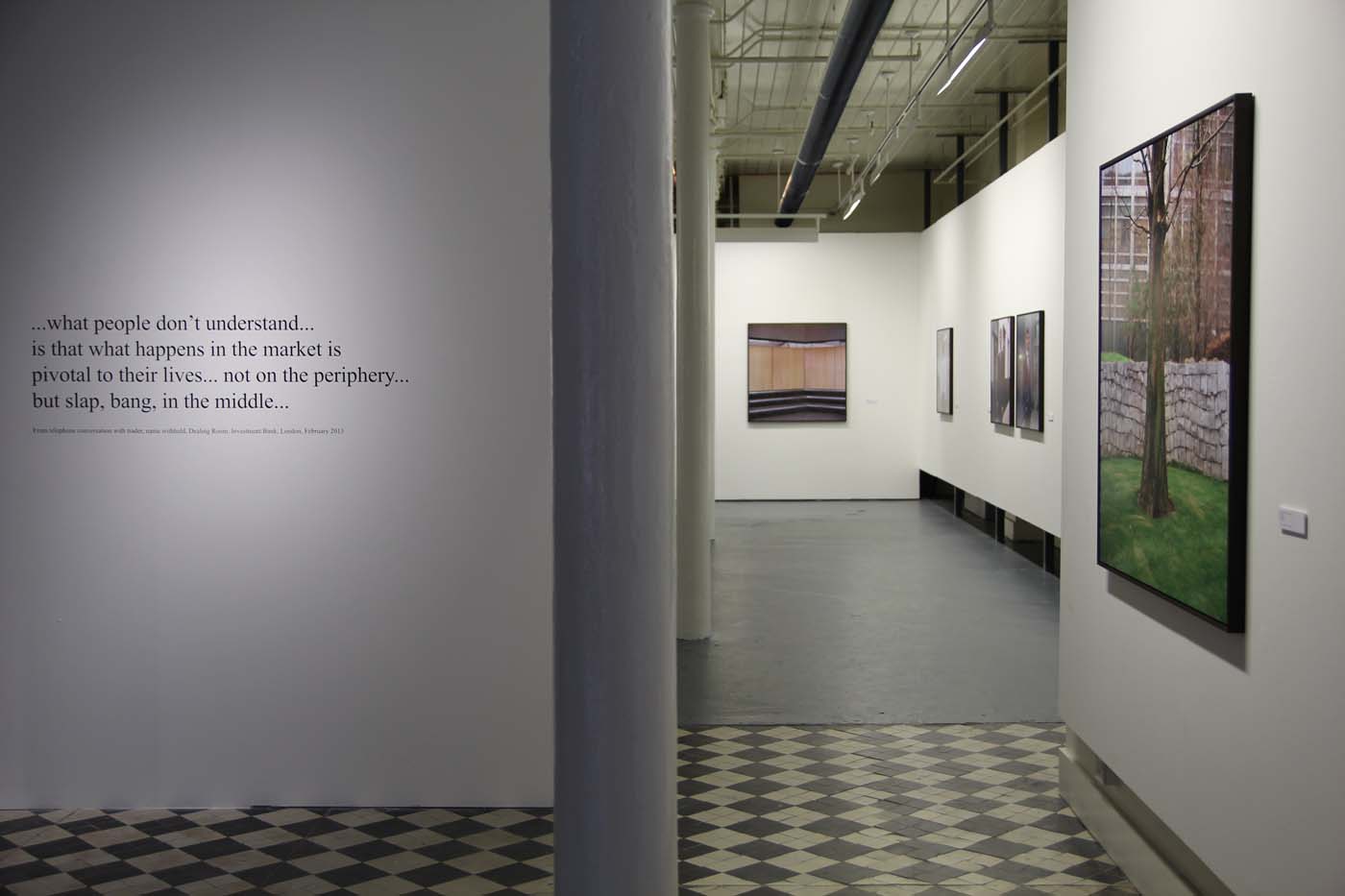
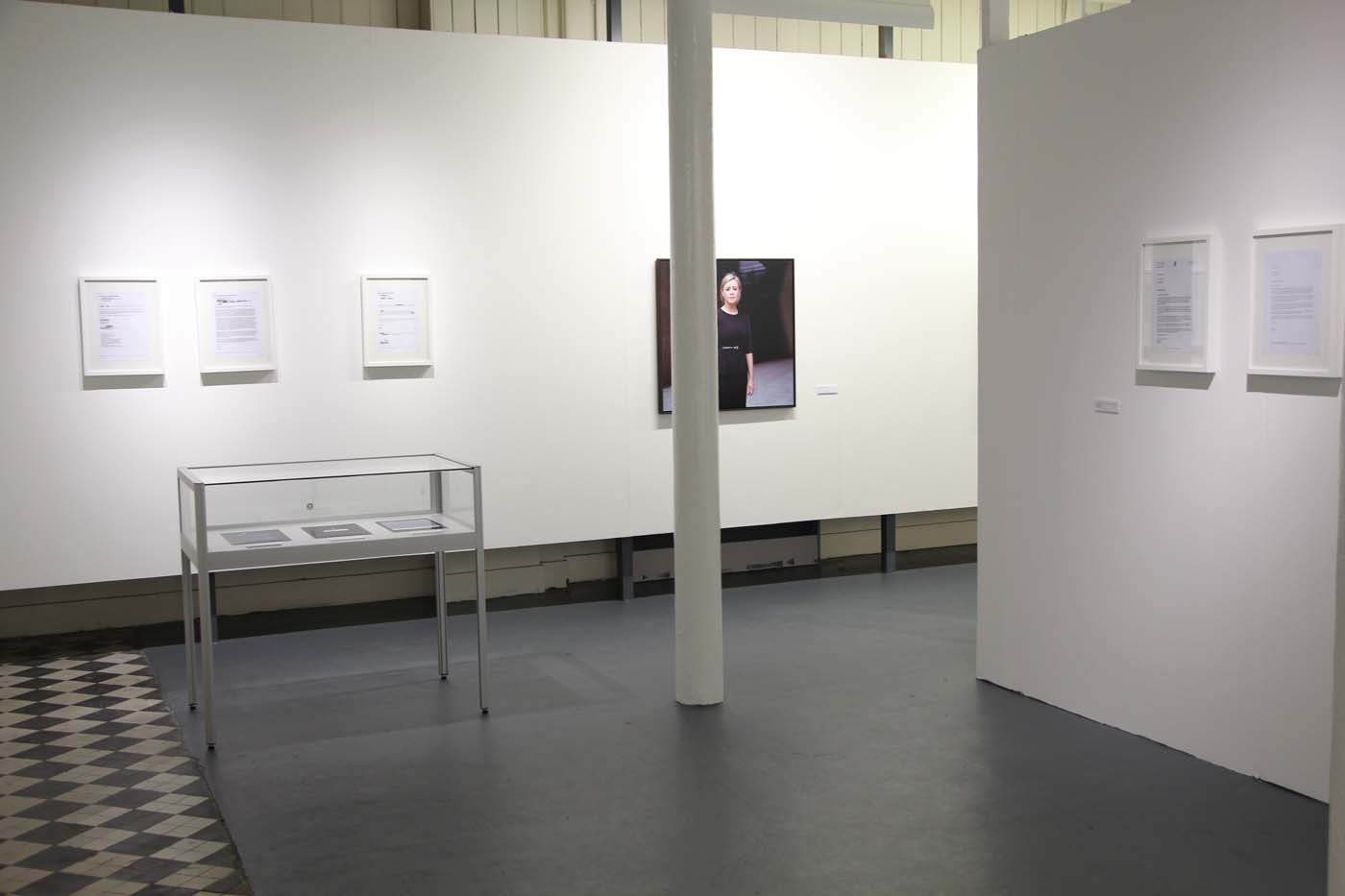
The installation is similarly framed by the soundscape generated through the data generated by an algorithm identifying the application of the words Market or Markets by the British Chancellor of the Exchequer in his public speeches since taking office.
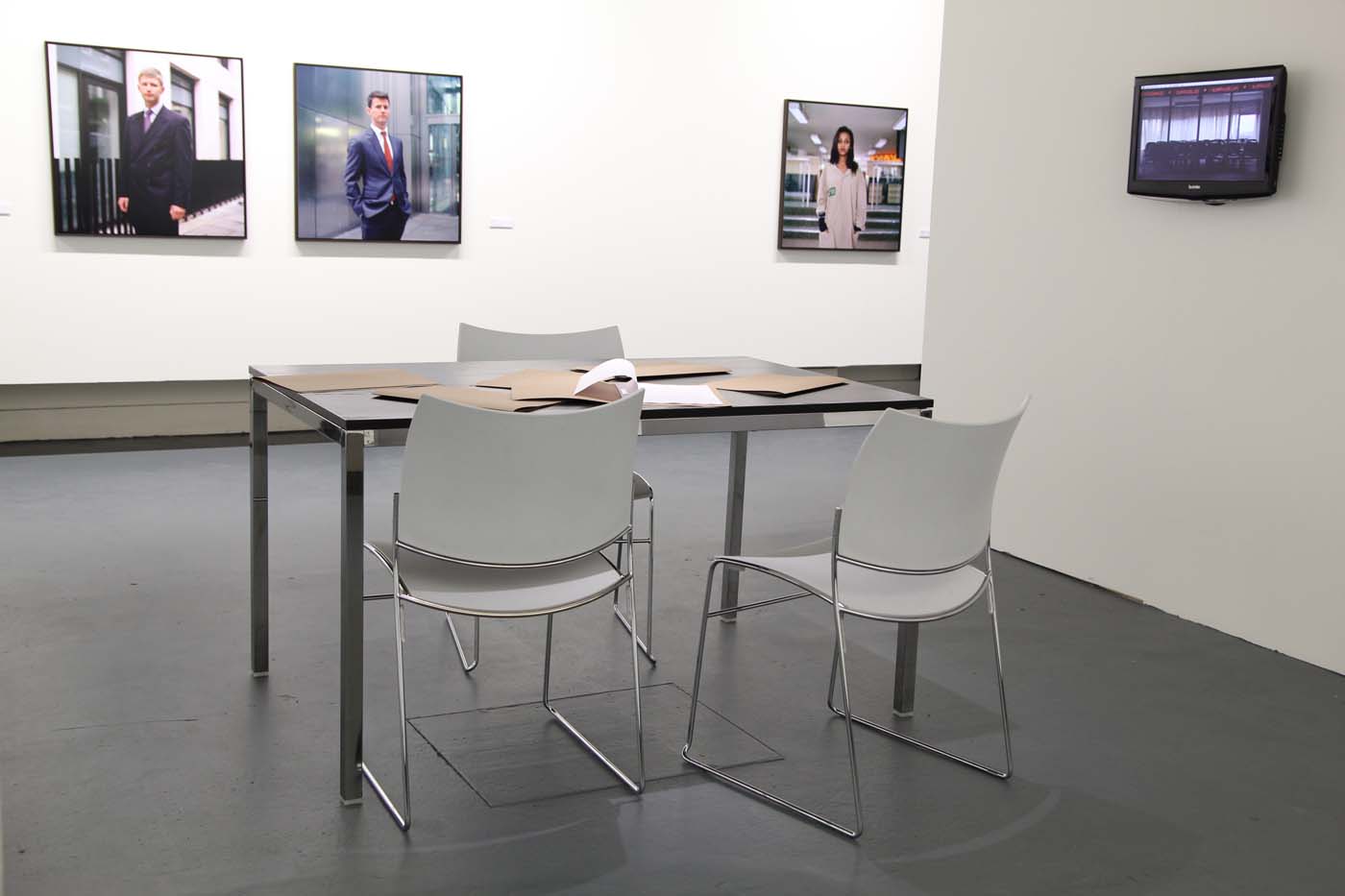

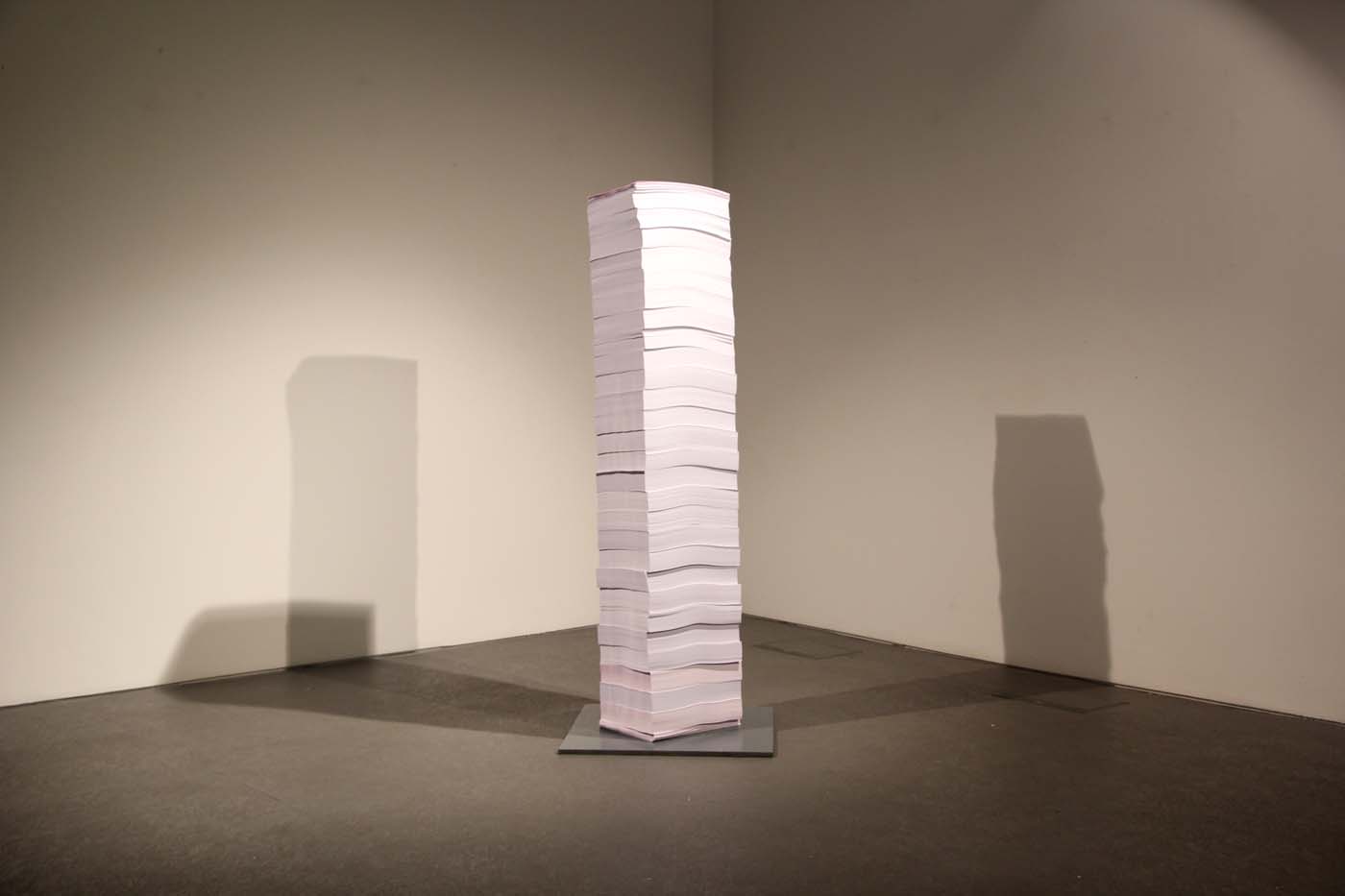
The installation image below shows the 6 feet high stack of A4 paper also titled The Normalisation of Deviance as part of the installation. This equates to the findings by a Chicago-based researcher of the number of global positions taken through the use of algorithms on one stock in one nanosecond. The total was 14,000 and equates to this amount of paper if this data was printed out. On the pages facing up is the quote:
…what people don’t understand… is that what happens in the market is pivotal to their lives… not on the periphery…but slap, bang, in the middle…
(From telephone conversation with trader, name withheld, Dealing Room, Investment Bank, London, February 2013
THE MARKET @ Belfast Exposed
August 29, 2013 § Leave a comment
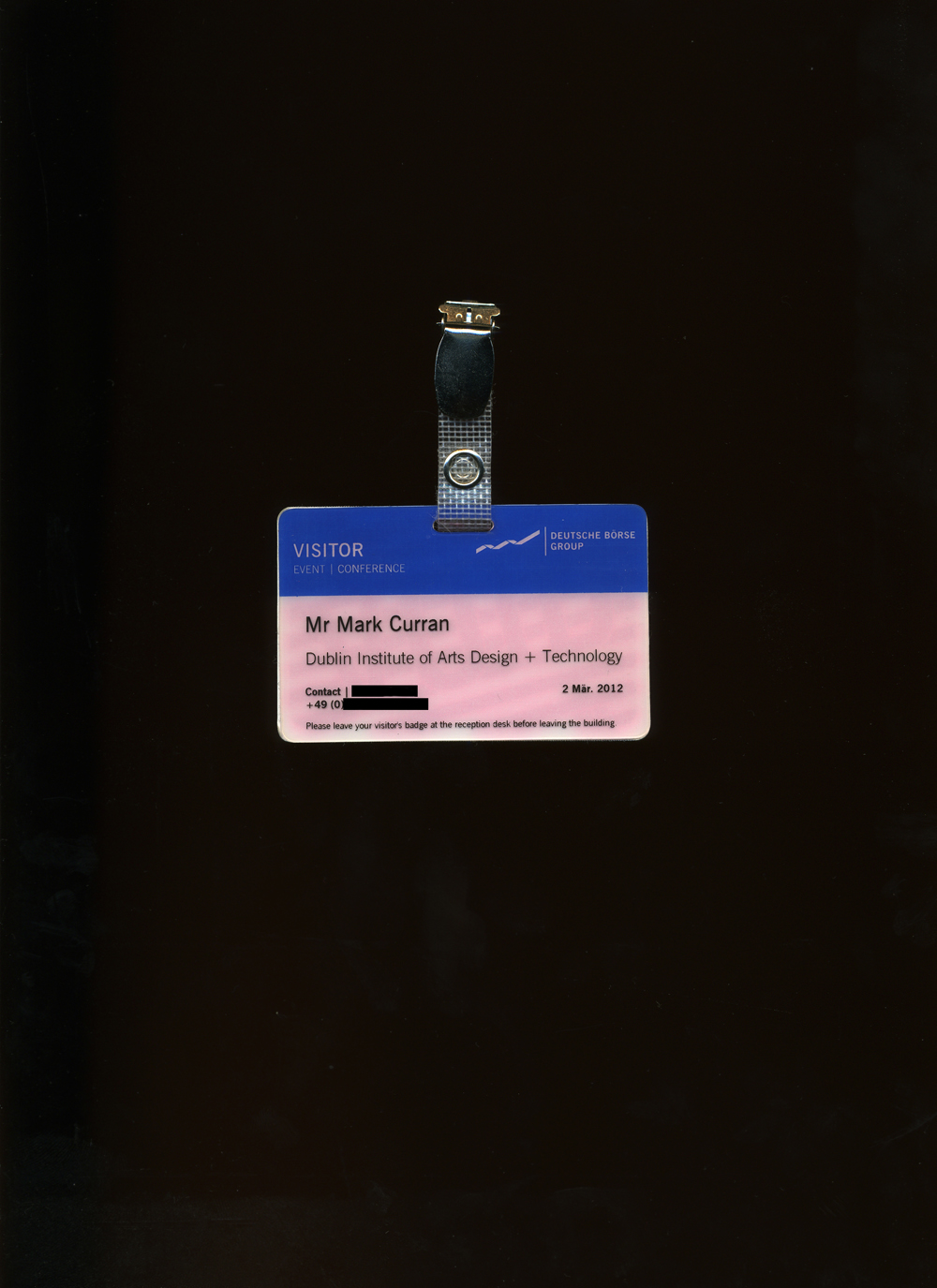
Void Visitors Pass, Eschborn, Frankfurt, Germany, March 2012
THE MARKET
Further information available here.
THE MARKET @ Gallery of Photography, Dublin
August 22, 2013 § Leave a comment
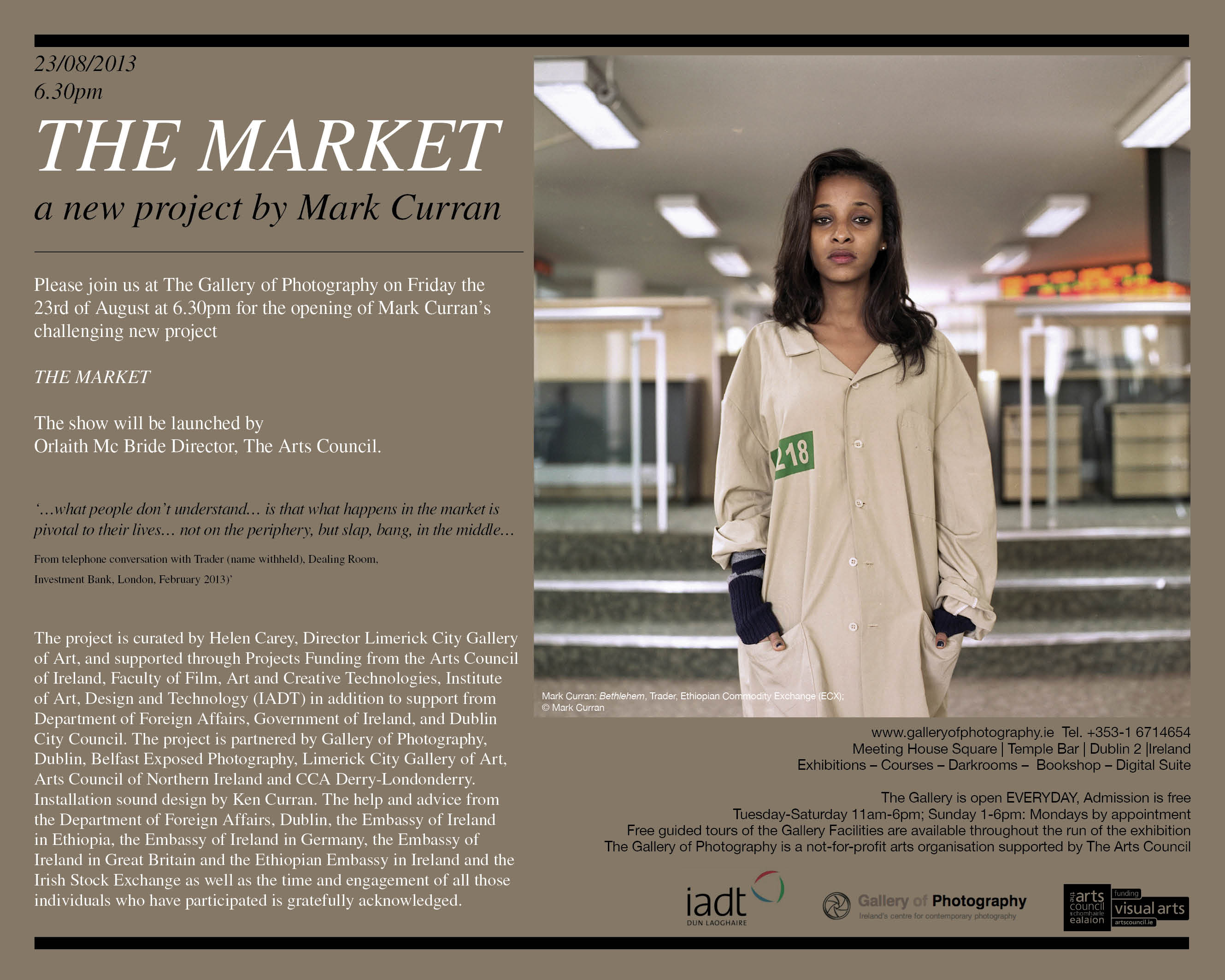
The installation of THE MARKET by Mark Curran, curated by Helen Carey, on the function and condition of the global stock and commodity markets will be opened this Friday, August 23rd at 6.30pm by Orlaith McBride, Director of the Arts Council of Ireland at the Gallery of Photography, Dublin.
The show continues until October 1st. (Algorithm and sound design by Ken Curran). Further information here.
Beyond Control
July 18, 2013 § Leave a comment
There have been longer gaps between recent posts than would be liked, in the preparation for installations and events regarding the project in August & September in Ireland. However, a significant reference for this project and its undertaking has been the UK newspaper, The Guardian-supported, The Joris Luyendijk Banking Blog: Going Native In The World Of Finance. Luyendijk, a Dutch-born Anthropologist and journalist, has based himself in London for the last two years undertaking research, similar to the thematic concerns of this project, to understand how the financial world operates and who are those working within this sphere. There are a substantial and rich array of interviews and articles available on the blog here, which form an invaluable resource.
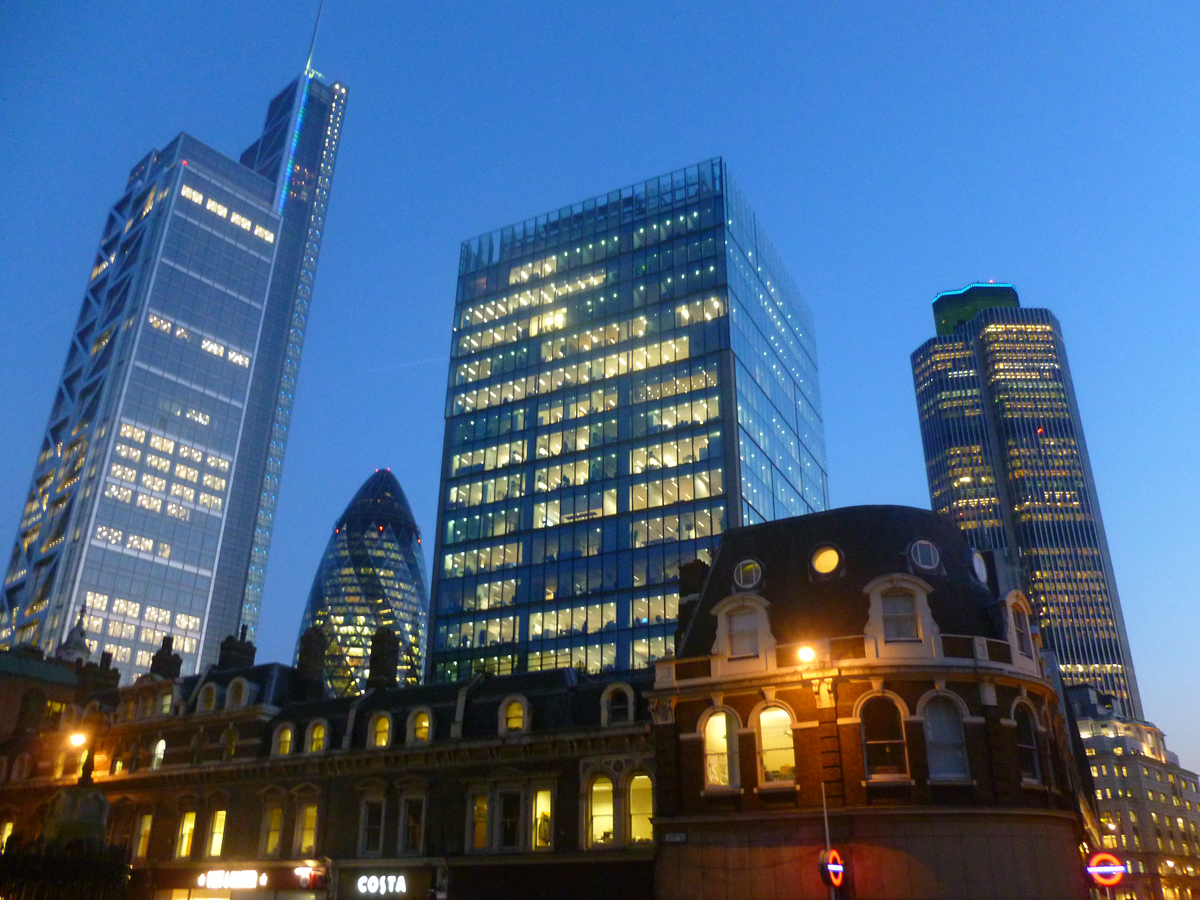
The City, London, February 2013 (Research image by Mark Curran)
However, I wish to briefly highlight a recent commentary piece by Luyendijk, titled, Our banks are not merely out of control. They’re beyond control. The full text can be read here. At the heart of the article is the realisation of the profound dysfunctional nature and structure of this sphere and as Luyendijk also observes, the market as construct being a central source of that dysfunctionality:
The reality is that global high finance is de facto a set of interlocking cartels that divide the market among themselves and use their advantages to keep out competitors.
In spite of the devastating global economic circumstance, it would seem to be business as usual. Just over 4 weeks ago, I recorded a conversation with a banker working in The City, who forthrightly stated, ‘the market has a history, but very little, if any memory’. As this project has evolved with resonances of Luyendijk observations, we may need to remember.
Lehman Brothers: Artwork & Ephemera
March 25, 2013 § Leave a comment
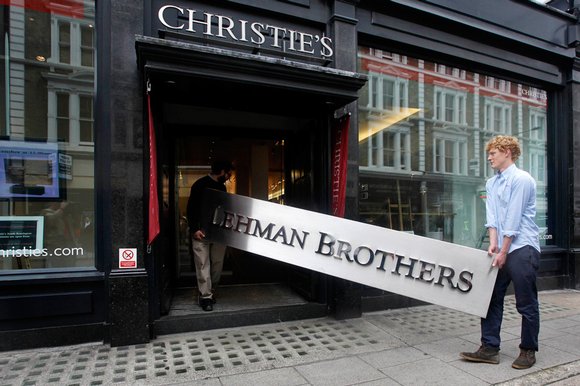
Lehman Brothers Auction at Christies, London, August 2010 (photograph by Linda Nylind/Guardian Newspapers)
Christie’s announce the auction of Lehman Brothers: Artwork and Ephemera which will take place at South Kensington on 29 September 2010 offering artworks and selected items of interest which once adorned the walls and offices of the British and European arms of the former banking powerhouse Lehman Brothers.
From the press release published in August 2010, under the direction of the administrators of the broke investment bank, once the fourth largest in the world, artefacts including the sign which had adorned the entrance to their offices in London’s Canary Wharf (image above) and also the contents of the art collection which included works by Gary Hume, Lucien Freud and the photograph, New York Mercantile Exchange 1991, by Andreas Gursky, were to be auctioned at market.
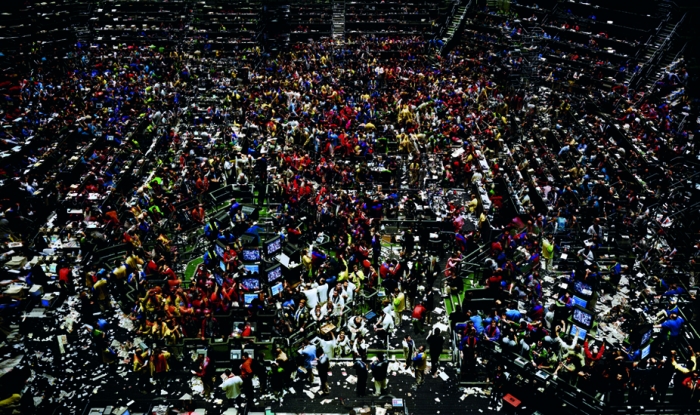
New York Mercantile Exchange 1991 by Andreas Gursky
The timing of the auction was also significant, coinciding with the second anniversary of when the company went into administration. Citing the experience of the dismantlement of Enron, one of the administrators observes:
The brothers Lehman collected artwork which adorned their offices since the 19th century. Over the subsequent years, of course, as the business expanded and the leadership changed, so did their corporate taste in art. We are excited to be working with Christies to offer the art collection owned by the companies in Administration. The auction date was selected to approximately coincide with the second anniversary of the Administrations. We think that there are many people around the world who would like to acquire some art with a Lehman connection, and we have therefore timed the sale to ensure that potential buyers can view and bid efficiently online. As with the Enron auction, some seven years ago, when we had bids from 43 countries, we expect internet bidding to be fast and furious – having the capacity to cope with a large volume of global bidding was one of the key reasons why we chose Christie’s.
Recognised as one of the central pillars of the global market and subsequent architects of the global economic collapse, and mindful of the Gursky image, Lehman Brothers would appear to have been returned to the simultaneous site of its making and undoing.
Sonntag presents THE MARKET (a progress report)
January 17, 2013 § 4 Comments
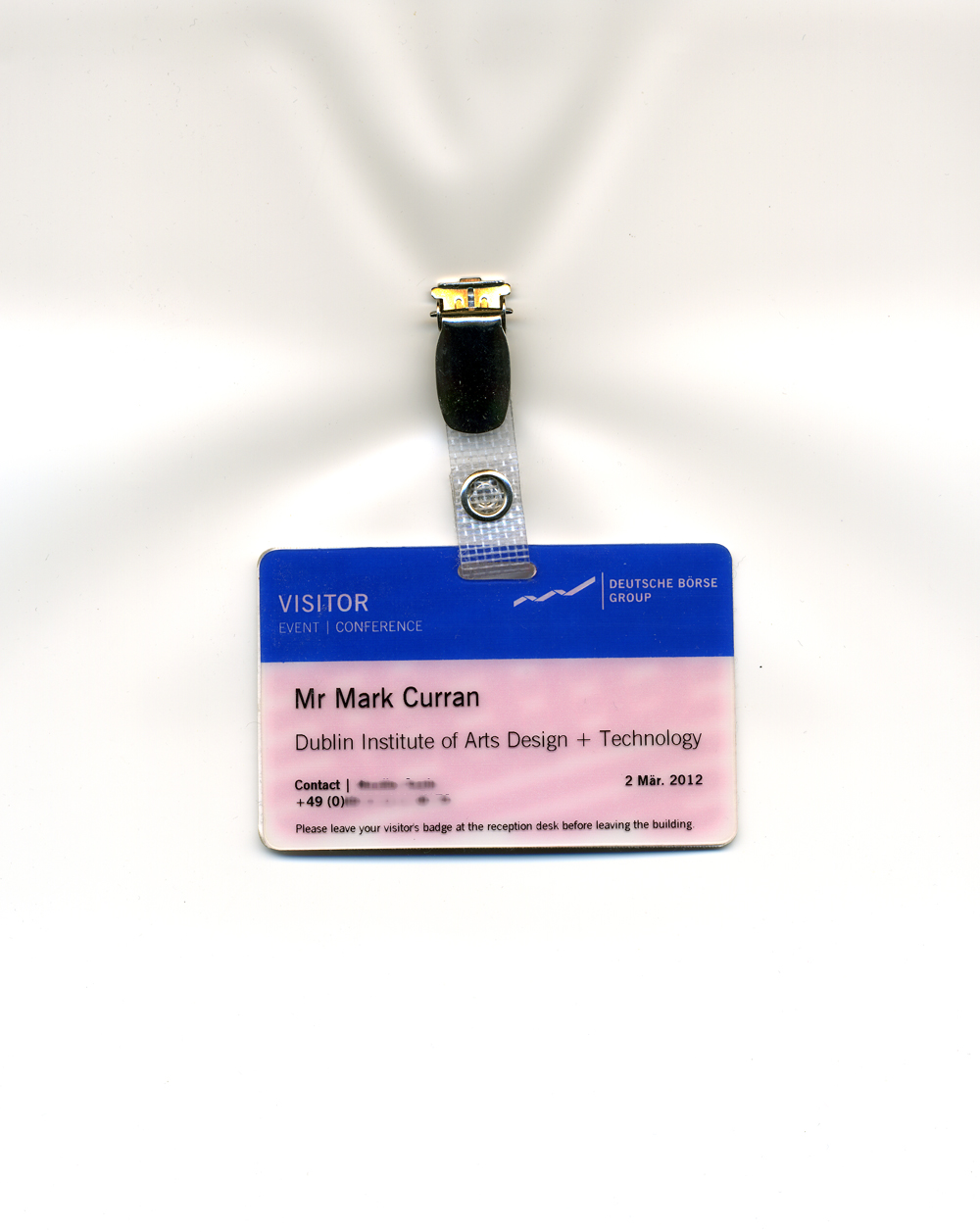
Void Visitors Pass, Deutsche Börse AG, Eschborn, Germany, March 2012
Sonntag would like to invite you to the installation of
THE MARKET (a progress report)*
by Mark Curran
Sunday
20 January
2 – 6pm
Exhibition dates
20 January – 23 January
Gossowstrasse 10, 4. floor
(Bell – Schiesser)
10777 Berlin
U1, U2, U3 Nollendorfplatz
U4 Viktoria – Luise Platz
Sonntag is a social sculpture that invites artists to collaborate and share their work in a domestic space. The project is realized on a monthly basis by way of a public invitation to a Sunday matinee where the invited artist‘s favorite cake and coffee/tea is shared with the audience.
This project was started in September 2012 by Adrian Schiesser and April Gertler.
*The event will feature work in progress from the project, THE MARKET.
Update images of the event can now be found here.
‘capital remains invisible’: L’Argent/Money (1928)
December 1, 2012 § Leave a comment
C’est proces est, peut-on dire…le proces de l’argent (You might say what is on trial…is money) proclaims the judge in the trial scene from the film L’Argent (Money). Directed by the French-born, Marcel L’Herbier and released in December, 1928, the film was an adaption of a story by the writer, Emile Zola. While Zola intended his story to be a ‘scathing representation of the French banking system of the Second Empire’, LHerbier sought in his ‘modernising’ version to ‘express, in all its modern virulence, his own contempt for money and capitalist speculation’. Centered on two duelling Bankers, the tale recounts their speculatory struggles against one another.

If somewhat ironically, the film cost almost 4 million French Francs at the time to produce, a fortune in today’s terms. L’Herbier had secured three full days access to the Paris Bourse (Paris Stock Exchange), where seeking to exploit the limited time, ‘there were fifteen hundred extras, about fifteen technicians, scaffolding that went up to almost the summit of the cupola, forty metres from the floor…and cameras everywhere’ (L’Herbier). Such scale is reflected throughout the film and, could be argued, evokes the privileged context it seeks to critically address.

‘Traders on the Trading Floor’ (still from L’Argent, 1928)
Prior to the Stock Market Crash of 1929, the central narrative is framed by the structures of world financial spheres, through images of the application of communications technology, named world city exchanges repeatedly referenced to locating the viewer in the midst of the Open Outcry of the traders on the Parisian Trading Floor. One of the innovative dimensions to the film is the ‘absolutely unprecedented mobile camera strategy’ (Noel Burch), exemplified in one key sequence. The film’s focus of speculation is the cross-channel flight of a pioneer pilot and the possible riches to be exploited from the site of his destination and at the time of his departure, the propellors of his plane mimic the frenzied activity of the Trading Pit of the Paris Bourse, ‘recorded by an automatic camera descending on a cable from the dome toward the central stock exchange ring’ (Richard Abel). The activities are visually bound, synergies heightened, the speculative process and those involved, implicated.
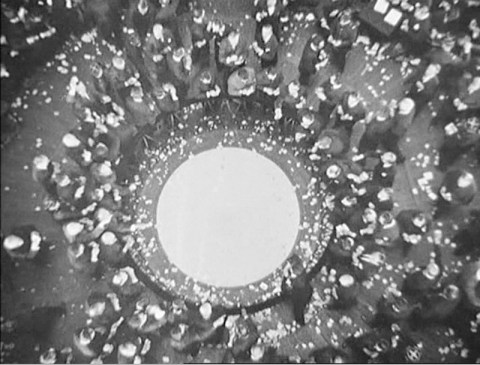
Trading Pit of the Paris Bourse (still from L’Argent, 1928)
The film critically acknowledges the interconnectedness of a then world economy, and while the scales of precarity and scope of speculation could be argued to have broadened, the resonance regarding the defining function of the market for the global neoliberal present are significant. The film studies and cultural historian, Richard Abel, writes:
L’Argent’s achievement in the end, rests on the correlation it makes between discourse, narrative and the subject of capital. Capital is both everywhere and nowhere, as Pierre Jouvet argues, echoing Marx; it motivates nearly every character in the film and is talked about incessantly, but it is never seen or – as the ‘dung on which life thrives’ – even scented. Capital remains invisible, and yet, its ideological manifestation, produces a surplus of effects…the film reflects on and critiques that which it cannot represent directly – the crucial reference point of a crisis in capitalist exploitation or, more specifically, the condition of western capitalist society on the brink of the Great Depression.
‘revolutionary’
September 23, 2012 § Leave a comment
The description given by a young female administrator of the Clearing Department at the Ethiopian Commodity Exchange (ECX) in Addis Abeba, in response to a question of why she was working at the ECX, the youngest commodity market in the world. Established in 2008, the same year as the ‘offical’ global economic collapse began, the ECX is unique for its kind on the continent of Africa and as a ‘not for profit’ trading framework, one of a very small number of such markets, globally.
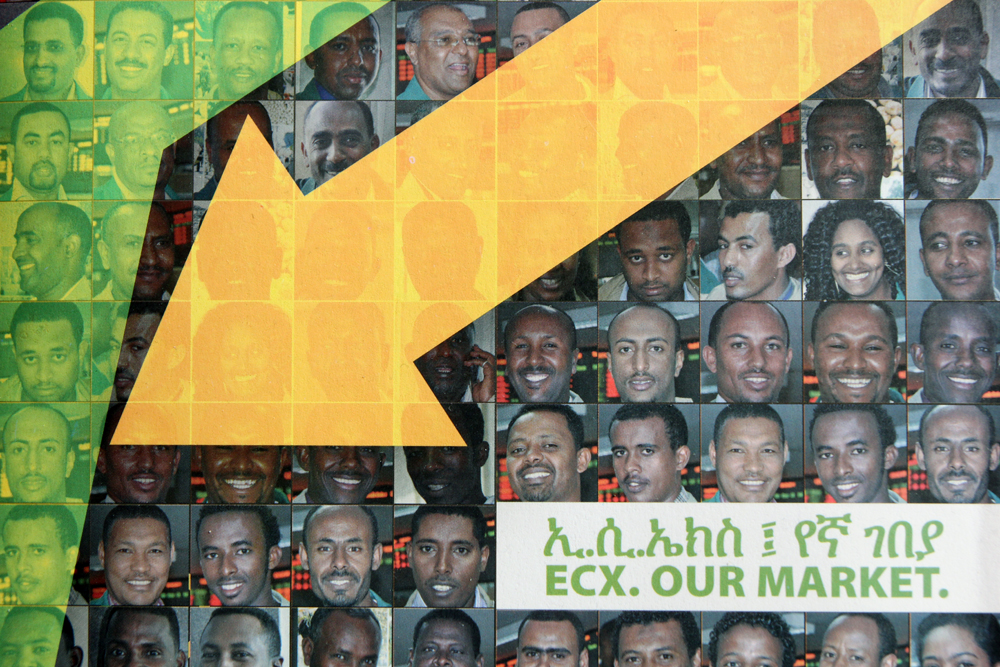
ECX. Our Market (cover detail, ECX publication, 2011)
The exchange, trading primarily in coffee, sesame and peabeans, was founded by Dr. Eleni Gabre-Madhin. A member of the Ethiopian diaspora, Dr. Eleni studied in the United States, completing her doctorate in applied economics at Stanford University. The subject of a PBS documentary, The Market Maker, she wishes to use the traditional role of the market in Ethiopian society as the ‘fair’ means and method to end hunger.
State owned, prices and membership are, to a degree, regulated and the profits, accumulated by the ECX for its services as a trading platform, are re-invested into the organisation as a whole. To encourage transparency, emanating from a stated responsibility to the individual small farmer, farming collective or investor, the complete process from production, selection, storage to the point of sale and subsequent delivery is closely supervised in a framework of ‘open dialogue’. The exchange has grown from a permanent staff of 34 at the beginning to over 600 at present.

‘Trading Floor, ECX’, Addis Abeba, Ethiopia, September 2012
For the past month, following a extended process of negotiation, I have spent most of my time in the Ethiopian capital on one floor of one building, the Trading Floor of the ECX. While immersed in the working atmosphere of the traders and administrative staff, the functioning and ethos of this market framework appear to allude to the complexities embodied in the term, Market. Central to the functioning of capitalism, this term inspires descriptions, due to the global economic collapse, of fear or to be at the mercy of while here in Ethiopia, where 20 million of the country’s citizens (a quarter of the population) are dependent on the coffee industry alone, the framework presently installed at the ECX, appears to offer other possible descriptions.
THE MARKET a project by Mark Curran
January 9, 2012 § 10 Comments
In the continuing evolutionary aftermath of the global economic collapse of 2008/2009 and absence of sustained practice-led research engagement with the central locus of this catastrophic event, the ethnographically informed, multi-sited, transnational project, THE MARKET (2010-), builds upon the cycle of long-term research projects, beginning in the late 1990s, by practice-led researcher and educator, Mark Curran, and focuses on the functioning and condition of the global markets and the central role of financial capital.
THE MARKET (installation image) Belfast Exposed 2013
The cycle of multi-media research projects, addressing the predatory context resulting from migrations and flows of global capital began with SOUTHERN CROSS (1999-2001)(Gallery of Photography/Cornerhouse 2002) which surveyed the spaces of development and finance of the so-called ‘Celtic Tiger’ Irish Republic. This was followed by The Breathing Factory (2003-2006)(Edition Braus/Belfast Exposed/Gallery of Photography 2006) and subject of his practice-led PhD, sited in a multinational complex in Leixlip in the East of Ireland, the project addressed the role and representation of labour, global labour practices and fragile nature of globalised industrial space. Ausschnitte aus EDEN/Extracts from EDEN (2003-2009)(Arts Council of Ireland, 2011) focused upon a declining industrial and coalmining region in the former East Germany, an area which prophetically evidenced the massive impact regarding the unevenness of development inherent through the functioning of neoliberal globalisation. All projects are intended to demonstrate a continuing and sustained engagement addressing the predatory impact of global capital.
Critically, the ongoing project, THE MARKET, which began in 2010, seeks to access those sites, which all of the other project work to date has also been decisively defined, spaces where literally and metaphorically, futures are speculated upon – the global markets – and to explore, survey and excavate focusing upon their operating functioning and how this is reflected in for example, language, architectural understandings and centrally, the individuals who inhabit, dwell and labour within these global financial spheres. Conceptually pivotal and mindful of technological evolution with specific reference to the role and functioning of algorithms, has been a desire to both make visible an understanding of such sites and to explore the interconnectedness of such markets. Therefore, multi-sited access has been sought to survey various global locations, including sites in Dublin, London, Frankfurt, Addis Ababa and Mumbai. Extended stays and re-visits have been undertaken in each location to facilitate further research regarding the site, address access, establish contacts and develop relationships with individuals as key collaborators and informants of the project.
As demonstrated in Curran’s previous projects, the cross-disciplinary interventions have included an ethnographic understanding in the collaborative and multi-vocal application of media in the form of photography, audio-digital video, soundscape and the collation of verbal testimony. The intention for THE MARKET has been to afford process-led undertakings over the course of its construction, extending to site-specific interventions, web presence and forums around the project installations incorporating interested parties thereby facilitating the opening up of discursive spaces around the central thematic.
In the financial markets, there is a natural predatory instinct that is hard to control (former trader and author, Micheal Lewis, BBC World Service, 9 May 2010)
The video shows a taped up plastic curtain inside the factory, one that seems to be installed for blocking the artist from viewing production equipment and process. Although we cannot see, there seems to be a working (breathing) machine inside the curtain as it, almost unnoticeably, inflates and deflates repetitiously. In fact, the video seems to summate what the audience experiences in the exhibition. The camera made its way inside the factory, but it cannot tell us what the employees actually do or what they produce. We are only allowed to hear the breathe of the factory. This is analogous to today’s globalised economy and financial markets. For many of us, it is almost unfathomable to understand how they operate. We are left outside of a curtain, inside of which a giant machine breathes intermittently. (from Spectators of the Same Story: Economy, Technology, Photography, Jung Joon Lee, Review of The Breathing Factory: A Project by Mark Curran, DePaul Art Museum (DPAM), Chicago January-March 2010, CAMERAta, Seoul, Korea, May 2010)
Keywords Global Capital, Ethnography, Photography, Speculation, Transnational, Vulnerable, Fieldwork, Precarity, Testimony, Cross-disciplinary, Labour, Witness, Reflexive, Installation, Montage, Multivocality, Access, Technology, Algorithms, Visual Art, Futures
 THE MARKET