Lockout, Dublin 1913: Interview with Padraig Yeates
May 11, 2012 § 8 Comments
Author of the authoritative and substantial account, Lockout: Dublin 1913, the journalist, Padraig Yeates has been interviewed over six chapters, outlining the build up, resulting events and the subsequent impact of the Lockout. Linked below in the final chapter, Yeates argues how with the actions of 1913 were deemed an ‘heroic failure within the nationalist pantheon’ and as a result, the socialist ideals of the movement were subsequently ‘hijacked’ in favour of the same nationalist agenda in the overthrow of colonial dominance. However, with the forthcoming centenary, Yeates advocates a need to ‘reclaim’, in their fullness, the pivotal events of 1913.
Wall Street (1915)
April 29, 2012 § Leave a comment
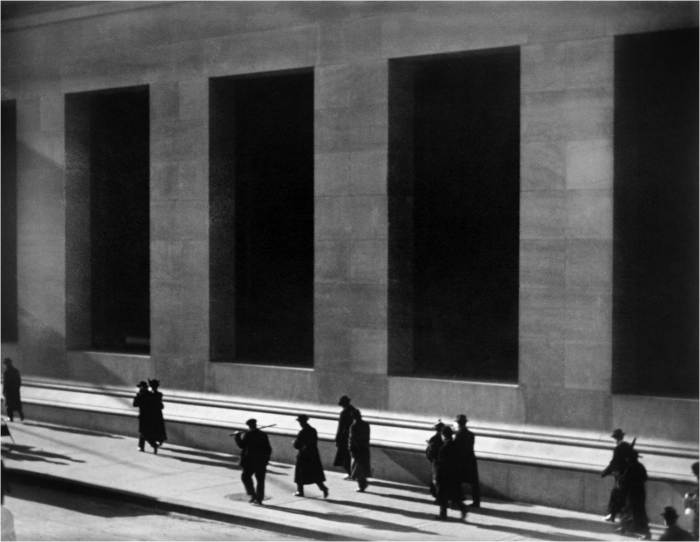
Two years following the Dublin Lockout, the American photographer, Paul Strand, whom had studied with Lewis Hine amongst others, made this picture on Wall Street in front of the newly built, JP Morgan Co. Building. With the original title, Pedestrians raked by morning light in a canyon of commerce, the continuing resonance of the image and its ability to visualise the supposed abstractness of capital is insightfully addressed here.
‘THE SEA IS FORGOTTEN’
April 22, 2012 § Leave a comment
Based on the project Fish Story, by artist, writer and educator, Allan Sekula, his new film, The Forgotten Space, co-directed with Noël Burch, seeks ‘to understand and describe the contemporary maritime world in relation to the complex symbolic legacy of the sea’. Framed by the processes of globalisation, the sea represents, ‘slow time’:
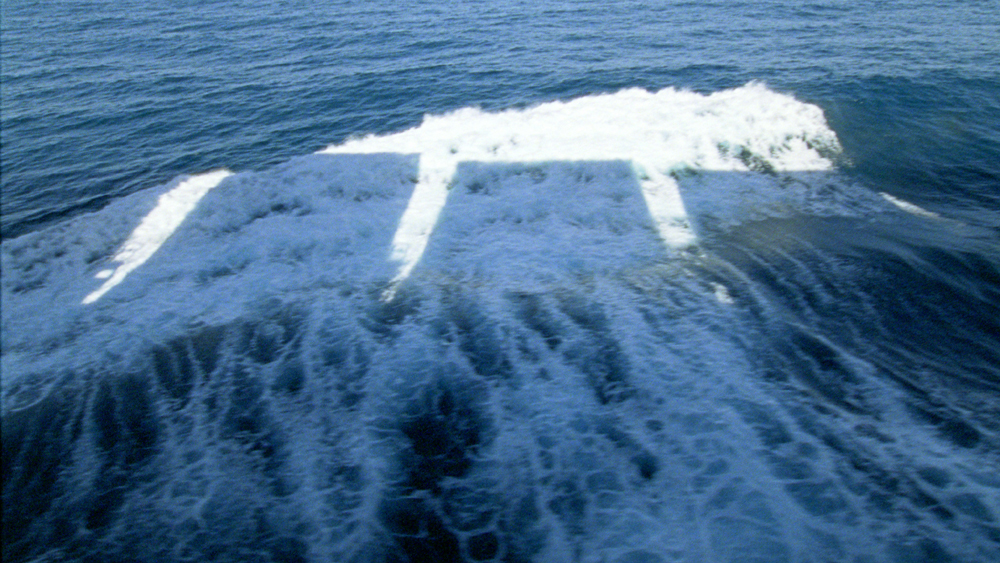
from The Forgotten Space (still)
Once you start thinking transnationally, you’re led to the sea: the ship is the first great instrument of globalisation…you can observe the compression of time and space in the modern world from the decks of a containerised cargo vessel.
In his notes, Sekula continues:
Our film is about globalization and the sea, the “forgotten space” of our modernity. First and foremost, globalization is the penetration of the multinational corporate economy into every nook and cranny of human life…our premise is that the sea remains the crucial space of globalization. Nowhere else is the disorientation, violence, and alienation of contemporary capitalism more manifest.
A significance of the original project and now the film, is the insight it provides concerning the complex yet determining relationship between labour and capital in all its globalised settings. The overarching context referenced in images from the Shanghai Stock Exchange.
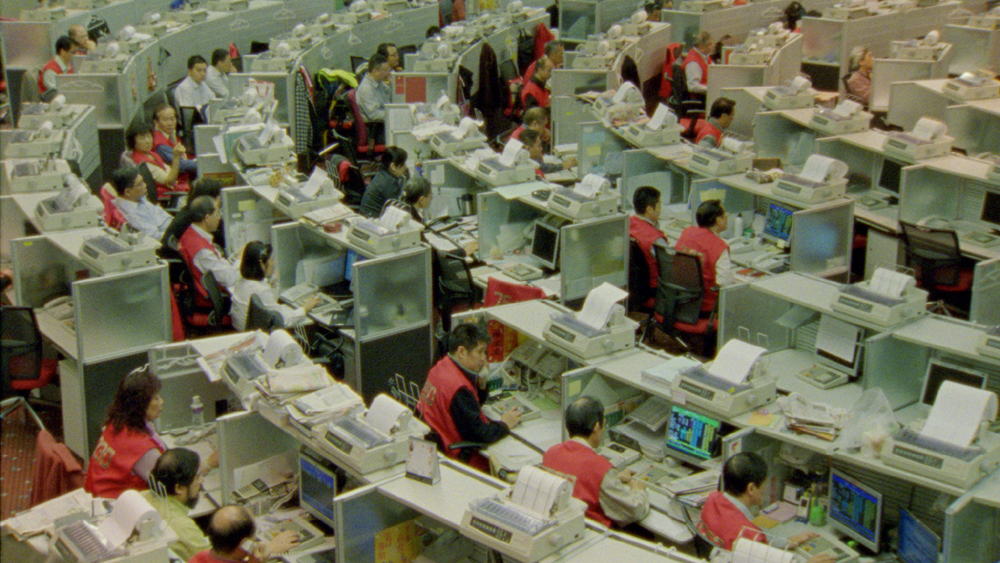
from The Forgotten Space (still)
The film has received a degree of media attention as witnessed in a recent interview with Sekula titled, ‘Filming the forgotten resistance at sea’, by the Guardian Newspaper addressing the project and its reception and can be found here. While a roundtable discussion between Sekula, Burch along with the cultural geographer and Professor at City University of New York (CUNY), David Harvey and art historian and curator, Benjamin Buchloh, following a screening at Cooper Union in May, 2011, can be viewed here.
Ultimately, while the film makes visible another labour narrative and its integral significance in a modernity that perhaps could be overlooked or indeed forgotten, critically, according to the curator and writer, Jennifer Burris, it equally proposes:
Forms of material resistance that not only reintroduce the maritime world as a space forgotten within the hypertrophied narratives of electronic trading and consumption-driven economies, it also argues for an understanding of the current financial crisis not as an aberration of global capital, but as a pathology intrinsic to capitalism itself.

from The Forgotten Space (photograph by Allan Sekula)
Liquidated
April 8, 2012 § Leave a comment
Published in 2009, Liquidated: An ethnography of Wall Street, was the result of a three-year ethnographic study addressing the culture of high finance by Professor of Anthropology, Karen Ho of the University of Minnesota:
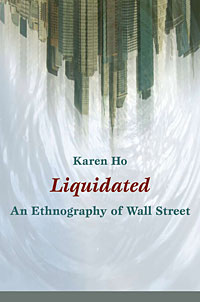
Based on this culture of liquidity and compensation practices tied to profligate deal-making, Wall Street investment bankers reshape corporate America in their own image. Their mission is the creation of shareholder value, but Ho demonstrates that their practices and assumptions often produce crises instead. By connecting the values and actions of investment bankers to the construction of markets and the restructuring of U.S. corporations, Liquidated reveals the particular culture of Wall Street often obscured by triumphalist readings of capitalist globalization.
Significant as a publication due to the innovative ethnographic grounding of its subject matter, in this short video, Ho outlines operating structures, the significance regarding ‘pedigree’, citizen complicity and the critical role of fear in this ‘culture of liquidity’:
‘Visuality is Slavery’
April 4, 2012 § 2 Comments
Writer, critic and Professor of Media, Culture and Communication at New York University, Nicholas Mirzoeff has been posting daily discursive observations and reflections on his blog, Occupy 2012: A Daily Observation On Occupy, inspired by, and as a response to, his involvement with the New York Occupy movement.
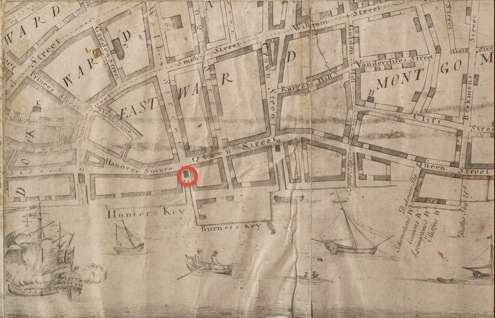
The slave market on Wall Street circled in red
This particular entry, Visuality is Slavery, was posted on Martin Luther King Day, when people had gathered at the African Burial Ground in Manhattan and then marched to Wall Street, former site of a slave market. Mirzoeff notes how this ‘was not simply a historical recovery but a reminder that the authority claimed by present day claims to visualize the social derives from the power of the slave-holder’:
http://www.nicholasmirzoeff.com/O2012/2012/01/16/j16-visuality-is-slavery/
It’s the Political Economy, Stupid
February 22, 2012 § Leave a comment
A key research concern of the project, Land of the Blind, is the defining relationship between capital and labour. As part of the mandate of this blog is to engage and present material that holds resonance concerning the contemporary context of the thematics which motivated the 1913 Dublin Lockout. Currently on display at the Austrian Cultural Forum New York is a group show curated by Oliver Ressler and Gregory Sholette. The title of the show ‘derives its name from the slogan which in the early 1990s came to define then presidential candidate Bill Clinton’s campaign, “It’s the economy, stupid”’.
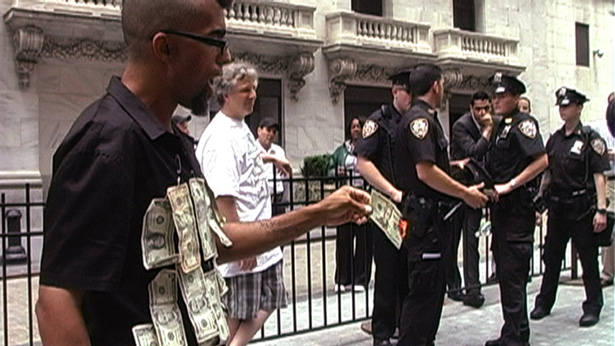
Dread Scott, Still from “Money to burn,” 2010, video.
In light of the present global situation, the curators state:
The economic crisis that we face today has also become a major crisis for representative democracy. The very idea of the modern nation state is in jeopardy as the deterritorialized flow of finance capital melts down all that was once solid into raw material for market speculation. It is the social order itself, and the very notion of governance with its archaic promise of security and happiness that has become another kind of modern ruin.
It’s the Political Economy, Stupid brings together an international group of artists who focus on the current crisis in a sustained and critical manner. Rather than acquiesce to the current calamity, this exhibition asks if it is not time to push back against the disciplinary dictates of the capitalist logic and, by use of artistic means, launch a rescue of the very notion of the social itself.
The artists included are Linda BILDA, Julia CHRISTENSEN, Yevgeniy FIKS / Olga KOPENKINA / Alexandra LERMAN, FLO6x8, Melanie GILLIGAN, Jan Peter HAMMER, Alicia HERRERO, INSTITUTE FOR WISHFUL THINKING, Zanny BEGG / Oliver RESSLER, Isa ROSENBERGER, Dread SCOTT.
The exhibition opened on January 24th and continues until April 22nd, 2012. Details can be found here:
http://www.acfny.org/press-room/press-images-texts/its-the-political-economy-stupid/
‘More Lockouts as Companies Battle Unions’
January 31, 2012 § 1 Comment

(photograph by Dan Koeck, New York Times)
Framed by the continuing global economic collapse, a recent edition of the New York Times reported how the Lockout, ‘once rare’, has become increasingly the means of redress in the United States, evidencing ‘increased employer militancy’.
Government Inquiry: Derelict Dublin, Images of the City from 1913
January 22, 2012 § Leave a comment
‘I condemn the whole of the tenement system now existing. It breeds misery; and worse. It causes a great waste of human life and human force; men, women and children can never rise to the best that is in them under such conditions.’ (John Cooke, Report into Housing Conditions (1914))
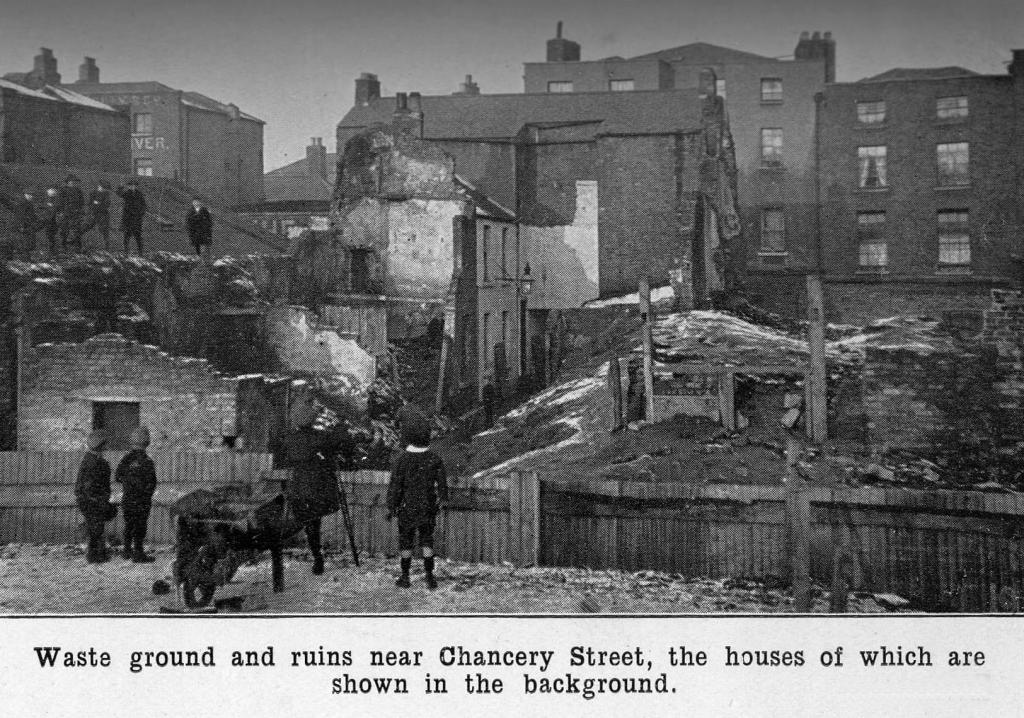
As part of the backdrop to the pivotal events of the 1913 Lockout. Linked is an essay and image gallery from Dublin City Public Libraries, taken from the inquiry and report of the Departmental Committee appointed to inquire into the housing conditions of the working class of Dublin which ‘ followed the collapse of tenement buildings in the city in the same year resulting in the deaths of seven people, including three children’ and many more badly injured. The dreadful living conditions of the working poor were to be addressed in this inquiry published by the Local Government Board For Ireland.
Dublin, 1913—Strike and Lockout
January 9, 2012 § Leave a comment
The 1913 Dublin Lockout was a defining and pivotal industrial dispute between workers and employers in the Irish capital, which began on the 26th of August, 1913 and lasted until January 18th, 1914. Central events took place in Dublin, the Irish capital, and is viewed now as one of the most significant moments in Irish labour history as workers fought for their right to organise and unionise.
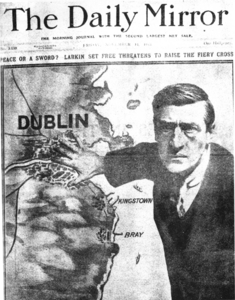
(image source: MultiText Project, UCC)
A series of images regarding the visual representation of these pivotal events can be viewed here. This series is part of a wider research project undertaken by the University College Cork titled the MultiText Project:
It is the largest and most ambitious project undertaken by any university to provide resources for students of Modern Irish History at all levels: University students, the general reader, and second-level students. The project aims to publish a minimum of 12 books, each dealing with a separate period of Irish history. Each book contains accounts of key personalities, concepts, and detailed elucidations of some case studies in the period. (source: University College Cork)
Publicart.ie Interview with project curator, Helen Carey
January 9, 2012 § Leave a comment
Publicart.ie interviewed Helen Carey, curator and Director of the Limerick City Gallery of Art, about her project developing the centenary exhibition to commemorate the 1913/ 2013 Lockout.
 THE MARKET